
Beyond the Search Bar: How Agentic Browsers Will Change How You Use the Internet in 2026
If you’ve ever opened 15 tabs just to book a trip, apply for a job, or compare prices, this article is for you.
I felt it recently while planning a “simple” vacation. Flights on one site. Hotels on another. Forms everywhere. The same details typed again and again. Half an hour later, I wasn’t smarter — just tired.
That’s when it clicked.
Why am I still doing all this manual work in 2025?
This frustration is exactly why agentic browsers are emerging — and by 2026, they won’t feel experimental. They’ll feel obvious.
TL;DR
Agentic browsers change how we use the web.
Instead of searching, clicking, and filling forms, you describe what you want done — and the browser plans and executes the steps for you.
By 2026, browsing won’t be about tabs and links. It will be about delegating outcomes and approving results.
Agentic BrowserS
A new era of web browsers, understand your goals and perform multi-step tasks across websites on your behalf.
Instead of helping you find information, it helps you get things done.
What Are Agentic Browsers? (Simple, No-Tech Explanation)
Agentic browsers don’t just display pages — they act.
Here’s the difference.
Traditional browsing
- You search
- You click
- You compare
- You type
The browser waits for instructions at every step.
Agentic browsing
- You explain the outcome you want
- The browser plans the steps
- It navigates websites for you
- You approve before anything final
In short:
You give instructions, not search queries.
That’s why experts describe this shift as moving from
“searching for information” → “delegating tasks.”
From Searching to Delegating: Why This Is a Big Shift
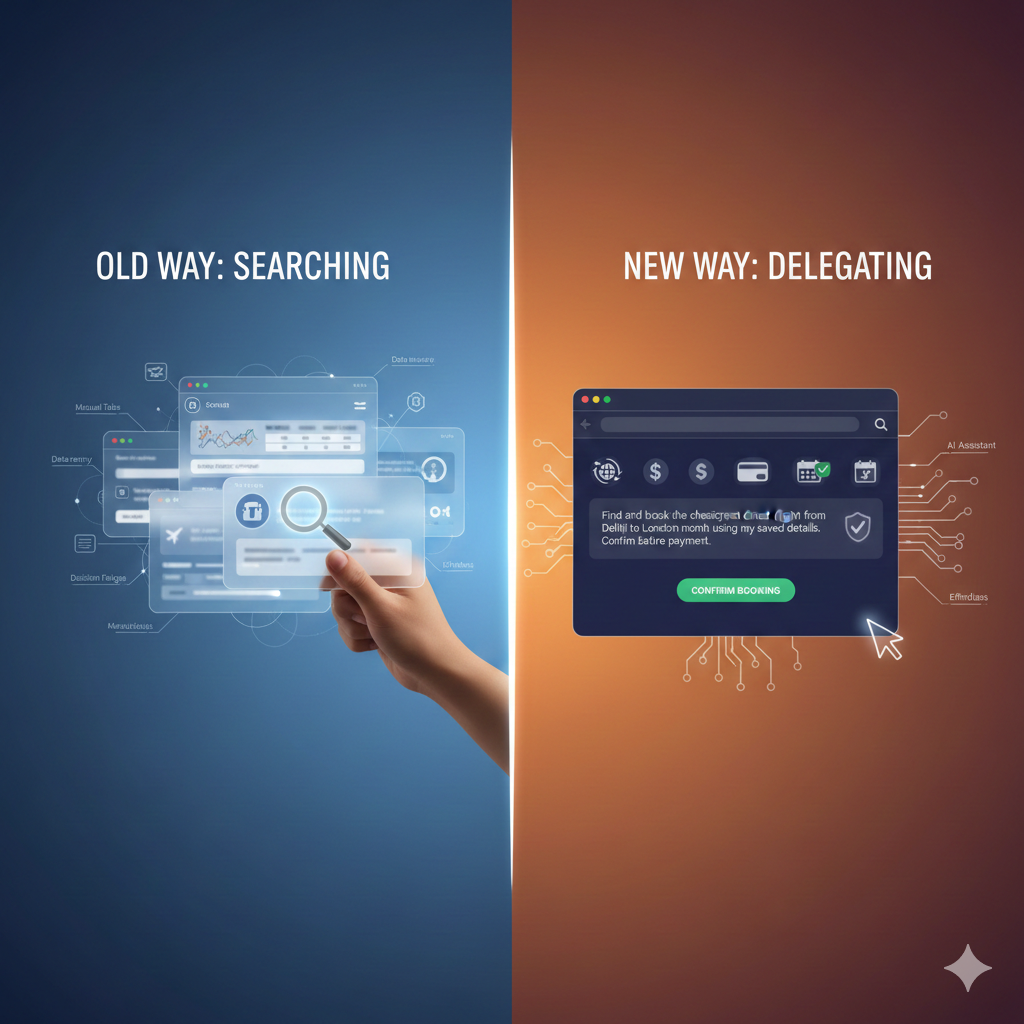
Old way:
Search “best flight from Delhi to London,” open multiple sites, compare prices manually, re-enter passenger details, repeat.
New way:
You type:
“Find the cheapest direct flight from Delhi to London next month and prepare the booking using my saved details.”
The agent:
- Searches trusted travel sites
- Compares options using your preferences
- Selects the best match
- Prepares the booking
- Asks for confirmation before payment
You don’t browse anymore.
You supervise.
That single change rewires how the internet works.
This Isn’t Science Fiction — It’s Already Starting
While 2026 is when agentic browsing becomes mainstream, early versions already exist.
- OpenAI’s Operator (ChatGPT Atlas) is experimenting with goal-driven web actions
- MultiOn can already navigate websites and complete tasks across tabs
- Perplexity Comet blends search, reasoning, and action into a single flow
These tools are early, imperfect, and cautious by design — but they prove the model works. What’s coming next is refinement, trust, and scale.
What 2026 Will Actually Look Like
By 2026, your browser won’t just have a search bar.
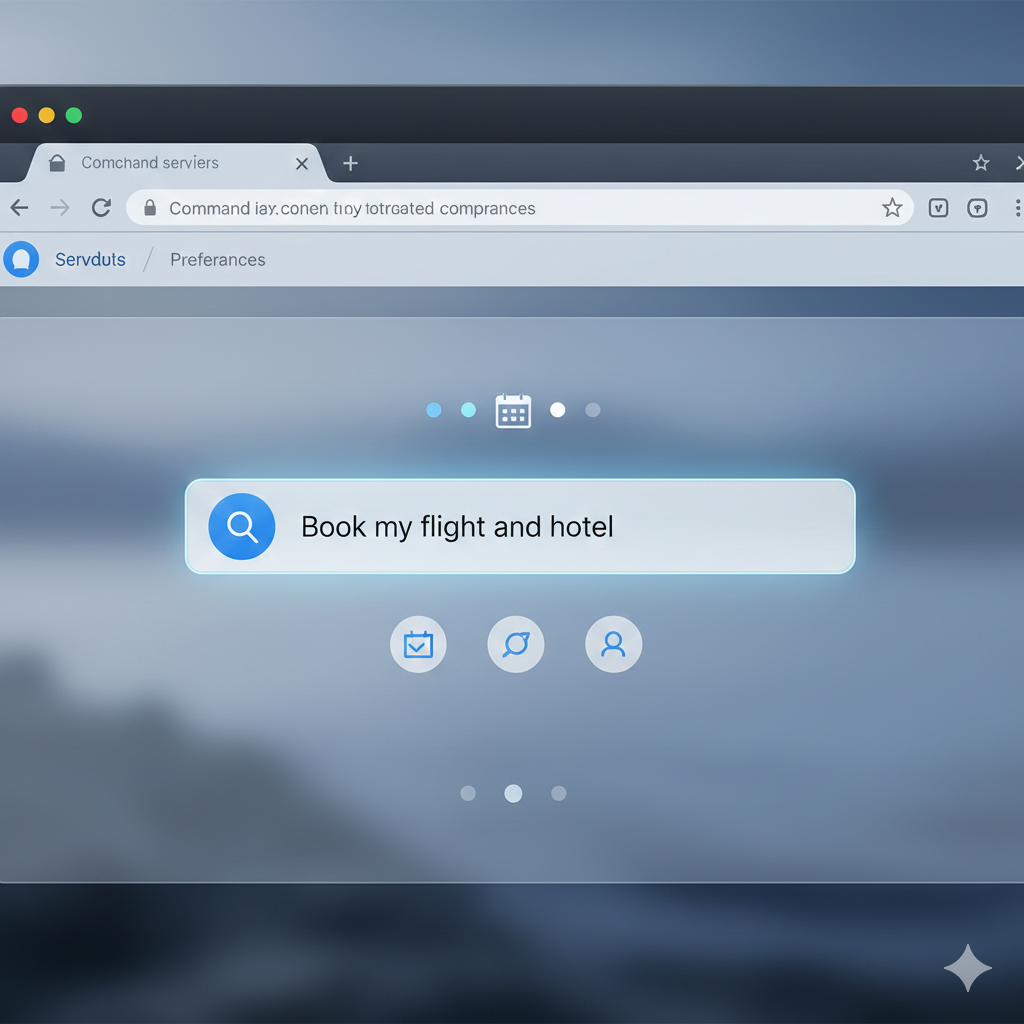
It will have a command bar — likely a Dynamic Island–style interface pinned to the top of your screen. Always available. Context-aware. Subtle.
Instead of typing keywords, you’ll describe outcomes:
“Compare the best laptops under $1,000 for video editing and shortlist the top two.”
The browser won’t interrupt your flow. It will quietly plan, act, and ask for approval only when needed.
The interface changes — but more importantly, your role changes.
But What About Accuracy and Mistakes?
One of the biggest challenges with agentic browsing today is accuracy.
A wrong click. A wrong date. A wrong button.
That’s why next-generation agentic browsers will rely on verification loops.
Before finalizing actions, the system will:
- Double-check key details (dates, prices, destinations)
- Validate actions against your intent
- Show step-by-step previews
- Require explicit confirmation before irreversible steps
In simple terms:
The browser won’t just act fast — it will act carefully.
Why Businesses Are Paying Attention
For professionals and founders, agentic browsers unlock quiet productivity gains.
They can:
- Automate repetitive admin work
- Speed up competitor and market research
- Extract insights from long reports
- Sync data across web-based tools
Example:
Instead of copying data from a LinkedIn profile into Salesforce, an agentic browser can extract the profile, map it to CRM fields, and create a lead record — without a single copy-paste.
It’s not another tool.
It’s a smarter layer on top of the tools you already use.
Final Thoughts: The Internet That Finally Works for You
Agentic browsers point to an internet that understands intent, not clicks.
No endless tabs.
No repetitive typing.
No manual juggling.
Once you experience this shift, going back to traditional browsing will feel… exhausting.
The browser of 2026 won’t just open pages.
It will get things done.
FREQUENTLY ASKED QUES : AGENTIC BROWSERS
For more practical AI insights and real-world use cases, visit:
👉 www.theautomationstrategist.com
Subscribe to our newsletter for clear updates on AI , without hype or panic.

Pingback: AI Swarms: The Silent 2026 Tech Shift You Can’t Ignore