Assam Earthquake: Can AI Predict It? A Product Leader’s Reality Check (2026)
In my 15 years of building and scaling technology products, I’ve seen many problems once labeled “impossible” become routine. Cloud outages became predictable. Fraud became detectable in real time. Generative AI reshaped how we create. Yet today’s Assam Earthquake reminds us of one hard truth:
Reliable earthquake prediction is still the Holy Grail we haven’t cracked.
Earlier today, January 5, 2026, a 5.1-magnitude Assam Earthquake struck near Morigaon, sending tremors across Central Assam. Thankfully, there were no major casualties. Still, panic spread fast.
Soon after, my inbox filled with a familiar question:
“With all this AI, why didn’t we know this was coming?”
As someone who lives at the intersection of AI, systems, and trust, let me break this down—clearly, honestly, and without hype.
TL;DR — The 2026 Reality of the Assam Earthquake
- AI cannot predict the Assam Earthquake days in advance
- AI can detect earthquakes in seconds and trigger alerts
- Android Earthquake Alerts already work in India
- The real gap is infrastructure, not intelligence
- In 2026, speed, reliability, and trust matter more than “smarter” models
Why the Assam Earthquake Matters More Than It Seems
Assam sits in one of India’s most seismically active regions. This isn’t new. History reminds us often.
However, what is new is public expectation.
People now assume AI should know everything.
That assumption is dangerous.
Because while AI prediction works well in digital systems, the Earth does not behave like software.
And that difference changes everything.
Assam Earthquake and AI Prediction: Why the Myth Persists
I’ve spent years building predictive systems. In tech, we forecast:
- Server crashes
- Payment fraud
- User churn
Those systems work because digital systems follow rules.
Tectonic plates don’t.
Despite the hype, AI cannot predict an Assam Earthquake before it begins.
Why?
Because:
- Geological signals are weak and inconsistent
- Fault stress builds silently over decades
- “Noise” hides meaningful patterns
Even in 2026, AI models can only tell us where earthquakes are likely, not when they will happen.
Prediction remains a myth. Detection does not.
Where AI Actually Helps During an Assam Earthquake
This is where reality becomes useful.
While we cannot see the future, AI helps us react faster than ever. And in earthquakes, seconds save lives.
his is the difference between a “forecast” and a “warning.”
Android Earthquake Alerts: AI Already Active in India
Most people don’t realize this.
Your phone is already a sensor.
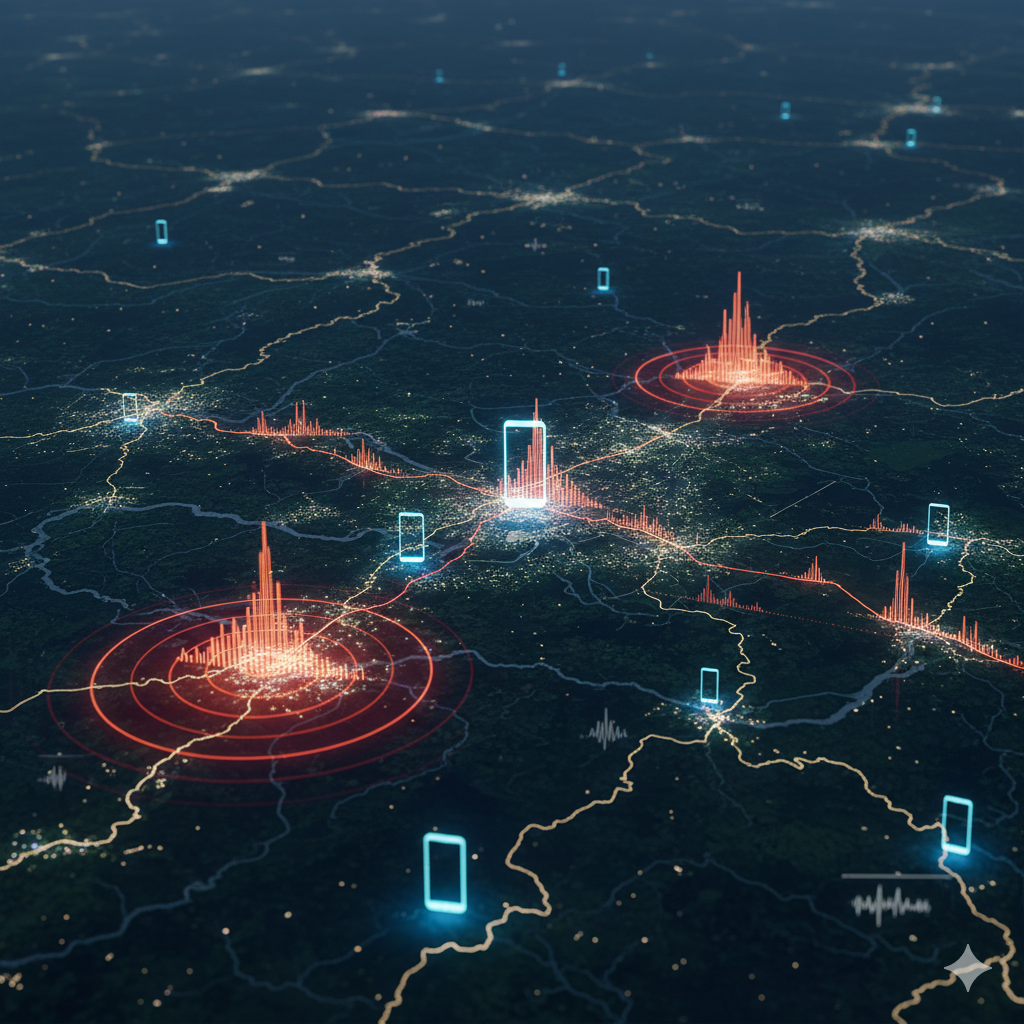
Google’s Android Earthquake Alerts System uses AI to analyze vibration data from millions of phones. When many phones shake at once, AI detects the pattern.
Then, within seconds, alerts go out. Not minutes. Seconds.
For the Assam Earthquake, this system could—and in many cases did—detect shaking faster than traditional reporting pipelines.
Why Detection Beats Prediction in 2026
Here’s a product truth I’ve learned the hard way:
Latency kills trust.
AI models like DiTing, now standard in seismic analysis, detect P-waves first. These waves are harmless. However, they arrive before destructive S-waves.
That small window—sometimes 5 to 30 seconds—allows systems to:
- Pause trains
- Stop surgeries
- Shut gas valves
- Send mobile alerts
This is not futuristic. This already works.
And it works because it focuses on detection, not prediction.
The Real Problem: India’s Missing Automation Layer
Technology is not the bottleneck.
Implementation is.
Japan doesn’t rely on human decisions during earthquakes. Their systems trigger actions automatically.
India, including Assam, still depends heavily on human-in-the-loop responses. That delay matters.
Imagine if today’s Assam Earthquake had automatically:
- Slowed trains across the Northeast
- Alerted hospitals instantly
- Isolated industrial gas lines
This is not an AI problem. This is a systems and governance problem.
We don’t just need “Intelligence”; but Infrastructure. India need the National Centre for Seismology data to be hardwired into their power grids and rail networks.
Why AI Hallucination Matters in Earthquakes
This connects directly to AI hallucination protection.
A false earthquake alert causes panic.
A missed alert costs lives.
Therefore, AI must be conservative.
In disaster systems, we prioritize:
- High confidence thresholds
- Clear uncertainty signals
- Human-on-the-loop oversight
- Explainable triggers
In short, we don’t need smarter AI.
We need more trustworthy systems.
What India Can Realistically Build Next
Based on real-world product experience, the next steps are clear:
- Denser seismic and phone-based sensor networks
- Nationwide automated alert triggers
- AI-assisted post-earthquake damage mapping
- Clear public education on alerts
All of this is achievable today.
No moonshots required.
Final Thoughts: Preparedness Over Prediction
After 15 years of shipping systems that people depend on, one lesson stands out:
Trust is the only real moat.
We should stop chasing perfect prediction.
Instead, we should build systems that respond perfectly.
The Assam Earthquake wasn’t a failure of AI.
It was a reminder.
The technology is ready.
The question is—are our systems?
FAQs: Assam Earthquake and AI
Can AI predict the next Assam Earthquake?
No. AI cannot reliably predict the exact time or date of earthquakes in 2026.
Why didn’t everyone get an alert today?
Alerts depend on depth, distance, and expected shaking. Not all quakes trigger mass notifications.
How can I enable earthquake alerts on my phone?
Go to Settings → Safety & Emergency → Earthquake Alerts. Turn on location and Wi-Fi.
Does AI help after earthquakes?
Yes. AI helps assess damage using satellite images and speeds up emergency response.